

Appendectomy (Appendix Removal)
- GI & Bariatric Surgery
- Whipple Surgery
- Bariatric Surgery
- Liver Resection
- Gastro Esophageal Surgeries
- Colorectal Surgeries
- Appendectomy
- Hemorrhoidectomy
- Partial Colectomy
- Nissen Fundoplication
- Peptic / Gastric Ulcer Treatment
- Piles Surgery
- Gastrointestinal Surgery
- Surgery for Morbid Obesity
- Hepatopancreaticobiliary Surgery
- Post-Cholecystectomy Bile Duct Injury
- Incisional Hernia
- Minimally Invasive Surgery
- Gallbladder (Biliary) Stone Treatment
Appendectomy (Appendix Removal)
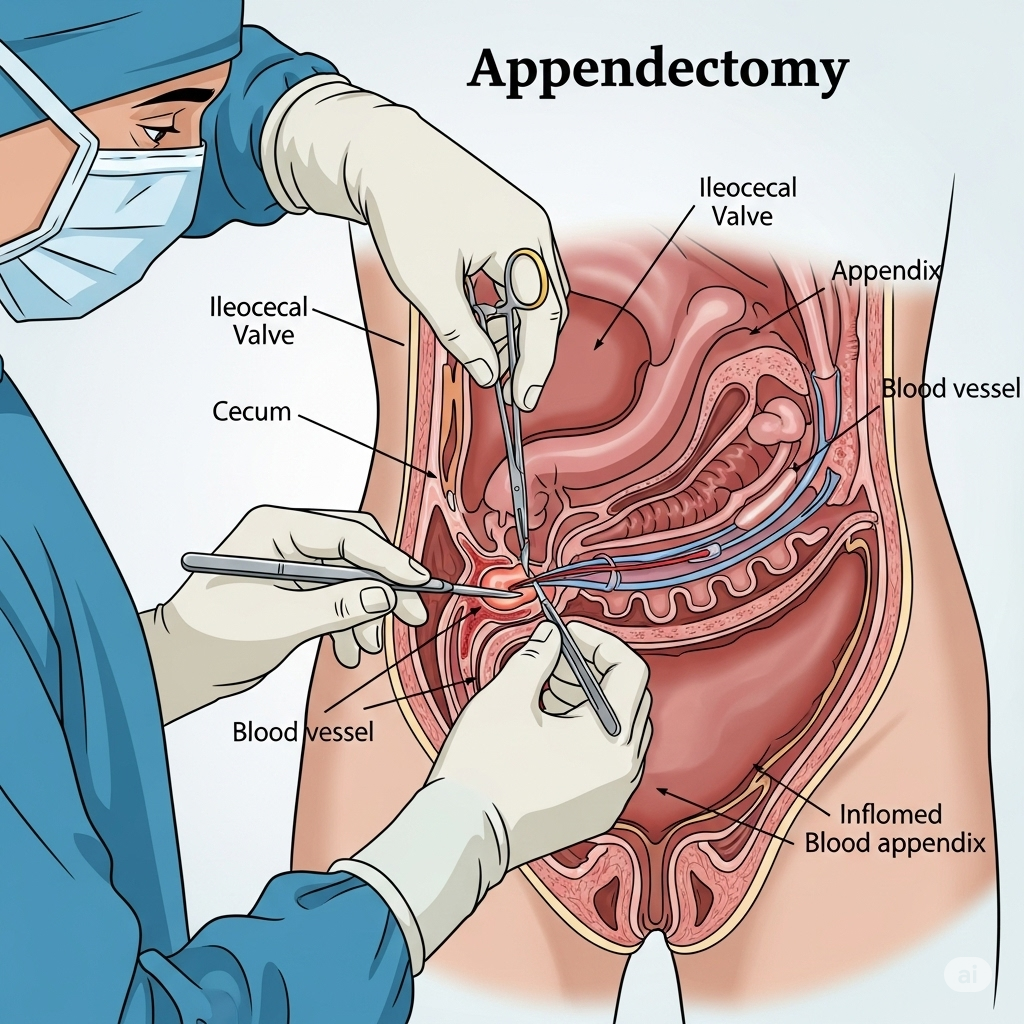
Appendectomy: Emergency Surgery for Appendicitis
**Appendectomy** is the surgical procedure to remove the **appendix**, a small, finger-shaped pouch that projects from your colon on the lower right side of your abdomen. This operation is most commonly performed as an emergency procedure to treat **acute appendicitis**, which is an inflammation of the appendix. If left untreated, an inflamed appendix can rupture, leading to serious complications. While Dr. kshitiz saranr, as a leading Gastroenterologist, does **not** perform appendectomies himself, he plays a crucial role in the **diagnosis of acute abdominal pain**, differentiating appendicitis from other gastrointestinal conditions, and ensuring prompt and accurate referral to a surgical team for timely intervention in Faridabad.
Understanding Appendicitis and When Appendectomy is Needed:
Appendicitis occurs when the appendix becomes blocked, often by a piece of stool, a foreign body, or swollen lymph nodes in the intestinal wall. This blockage can lead to inflammation, swelling, and infection. If not treated quickly, the appendix can burst, spreading infection into the abdominal cavity (peritonitis), which can be life-threatening.
Indications for Appendectomy:
- **Acute Appendicitis:** This is the primary reason for appendectomy. Symptoms typically include:
- Sudden pain that begins around the navel and shifts to the lower right abdomen.
- Pain that worsens when you cough, walk, or make other jarring movements.
- Nausea and vomiting.
- Loss of appetite.
- Low-grade fever.
- Constipation or diarrhea.
- Abdominal bloating.
- Occasionally, appendectomy may be performed for **chronic appendicitis** or as part of another abdominal surgery if the appendix is found to be abnormal.
Types of Appendectomy Procedures:
Appendectomy can be performed using two main surgical approaches:
1. Laparoscopic Appendectomy (Minimally Invasive):
- This is the most common approach today.
- The surgeon makes several small incisions (typically 3) in the abdomen.
- A laparoscope (a thin tube with a camera) and specialized surgical instruments are inserted.
- The abdomen is inflated with gas (carbon dioxide) to provide a clear view.
- The appendix is identified, ligated (tied off) at its base, and removed through one of the small incisions.
- **Benefits:** Smaller incisions, less pain, shorter hospital stay, faster recovery, and minimal scarring.
2. Open Appendectomy:
- The surgeon makes a single incision (typically 2-4 inches long) in the lower right abdomen.
- The appendix is directly visualized, ligated, and removed through this larger incision.
- This approach may be necessary if the appendix has ruptured, if there is extensive infection, or if the patient has had previous abdominal surgeries that make laparoscopic access difficult.
Preparation for the Procedure:
Since appendectomy is often an emergency, preparation is swift:
- **Rapid Diagnosis:** Clinical examination, blood tests (e.g., complete blood count, inflammatory markers), and imaging (ultrasound or CT scan of the abdomen/pelvis) are quickly performed.
- **NPO Status:** Patients are instructed not to eat or drink anything.
- **Intravenous Fluids & Antibiotics:** May be started immediately to prevent dehydration and manage potential infection.
- **Informed Consent:** The surgical team will explain the procedure and obtain consent.
Recovery and Post-Procedure Care:
- **Hospital Stay:** Typically 1-2 days for laparoscopic appendectomy, longer for open or complicated cases.
- **Pain Management:** Pain medication will be provided.
- **Diet:** A gradual return to a normal diet, starting with liquids and soft foods as tolerated.
- **Activity:** Early ambulation (walking) is encouraged. Strenuous activities and heavy lifting are usually restricted for a few weeks.
- **Follow-up:** A follow-up appointment with the surgeon is usually scheduled within a few weeks.
Potential Risks and Complications:
While appendectomy is generally safe, potential complications can include:
- Wound infection.
- Bleeding.
- Damage to nearby organs (rare).
- Abscess formation (collection of pus) within the abdomen.
- Ileus (temporary paralysis of bowel movements).
- Adhesions (scar tissue formation) in the abdomen, which can sometimes lead to future bowel obstruction (rare).
- Anesthesia-related risks.