

Lower Gastrointestinal Endoscopy (Colonoscopy) - Screening & Diagnosis
- Advanced Endoscopy
- Upper GI Endoscopy
- Lower GI Endoscopy (Colonoscopy)
- ERCP (CBD Stone Removal / Stenting)
- EUS Guided Procedures (FNA/FNB, Drainage)
- Single / Double Balloon Enteroscopy
- Esophageal / Antral Stenting
- Esophageal & Anorectal Manometry
- Foreign Body Removal
- PEG Tube Placement
- POEM (Peroral Endoscopic Myotomy)
- STER (Submucosal Tunneling Endoscopic Resection)
- ESD (Endoscopic Submucosal Dissection)
- EMR (Endoscopic Mucosal Resection)
- Spyglass for Pancreatic Biliary Pathology
- Gastrointestinal Bleeding
- Biliary & Pancreatic Stenting
- Anti Reflux Procedures
Lower Gastrointestinal Endoscopy (Colonoscopy)
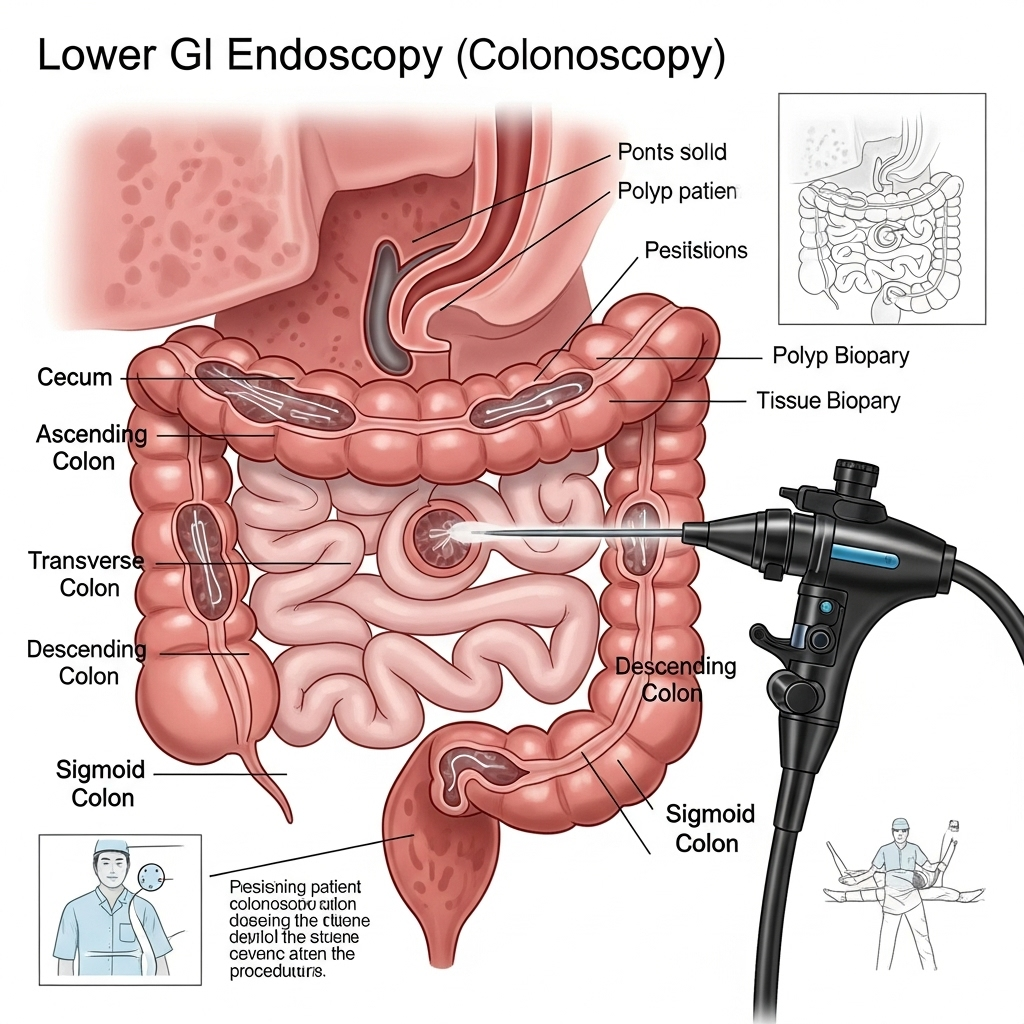
Lower Gastrointestinal Endoscopy (Colonoscopy): Vital for Colon Health & Cancer Screening
Lower Gastrointestinal Endoscopy, commonly known as **Colonoscopy**, is a crucial medical procedure used to examine the entire length of your large intestine (colon) and rectum. It's an indispensable tool for diagnosing various bowel conditions, investigating symptoms, and, most importantly, for **colorectal cancer screening** and prevention.
What is a Colonoscopy?
During a colonoscopy, Dr. kshitiz saran uses a long, flexible tube called a colonoscope, which has a light and a tiny camera at its tip. This scope is gently inserted through the anus and advanced through the rectum and into the colon. The camera transmits real-time images to a video screen, allowing the doctor to meticulously examine the internal lining for abnormalities, such as polyps (small growths that can become cancerous), inflammation, ulcers, or bleeding.
Why is a Colonoscopy Performed? (Indications)
A colonoscopy is recommended for a variety of reasons, including:
- Colorectal Cancer Screening: This is the most common and vital reason, especially for individuals over 45-50 years of age or those with a family history of colorectal cancer. It allows for the detection and removal of precancerous polyps before they turn into cancer.
- Investigating Symptoms: Evaluating the cause of persistent symptoms like rectal bleeding, blood in stools, chronic diarrhea or constipation, abdominal pain, unexplained weight loss, or iron deficiency anemia.
- Diagnosing Inflammatory Bowel Disease (IBD): Such as Crohn's disease or ulcerative colitis, and monitoring their activity and response to treatment.
- Surveillance: For individuals with a history of polyps, IBD, or colorectal cancer, regular colonoscopies are essential for monitoring.
- Therapeutic Interventions: Performing procedures such as:
- **Polypectomy:** Removing polyps to prevent them from becoming cancerous.
- Stopping active bleeding (e.g., from diverticula or ulcers).
- Removing foreign bodies.
- Dilating narrowed segments of the colon (strictures).
Preparation for the Procedure:
Thorough bowel preparation is the most critical step for a successful colonoscopy:
- Bowel Prep Solution: You will be given specific instructions for a liquid diet and prescribed laxative solutions to drink the day before the procedure. This ensures your colon is completely clean, allowing for clear visualization.
- Fasting: You will need to fast for several hours before the procedure as instructed.
- Medication Review: Inform Dr. Dhar about all your medications, especially blood thinners, iron supplements, or diabetes medications, as adjustments may be needed.
- Arranging for a Ride: Since you will receive sedation, it is mandatory to arrange for someone to drive you home after the procedure and stay with you for a few hours.
What to Expect During the Procedure:
- You will typically receive **conscious sedation** intravenously to help you relax and feel comfortable, often making you drowsy or even fall asleep.
- You will lie on your side, and Dr. Dhar will gently insert the colonoscope. You may feel some pressure or mild cramping as the scope advances and air is introduced to inflate the colon, but the sedation will minimize discomfort.
- The procedure usually takes 30-60 minutes, depending on the complexity and whether any interventions (like polyp removal) are performed.
Recovery and Post-Procedure Care:
- After the colonoscopy, you will be monitored in a recovery area until the effects of sedation wear off.
- You may experience some bloating or gas due to the air introduced during the procedure, which typically resolves quickly.
- Once fully alert, you can usually resume a normal diet unless advised otherwise.
- It's important to avoid driving, operating machinery, or making important decisions for the rest of the day due to the lingering effects of sedation.