

Bariatric Surgery (Weight Loss Surgery)
- GI & Bariatric Surgery
- Whipple Surgery
- Bariatric Surgery
- Liver Resection
- Gastro Esophageal Surgeries
- Colorectal Surgeries
- Appendectomy
- Hemorrhoidectomy
- Partial Colectomy
- Nissen Fundoplication
- Peptic / Gastric Ulcer Treatment
- Piles Surgery
- Gastrointestinal Surgery
- Surgery for Morbid Obesity
- Hepatopancreaticobiliary Surgery
- Post-Cholecystectomy Bile Duct Injury
- Incisional Hernia
- Minimally Invasive Surgery
- Gallbladder (Biliary) Stone Treatment
Bariatric Surgery (Weight Loss Surgery)
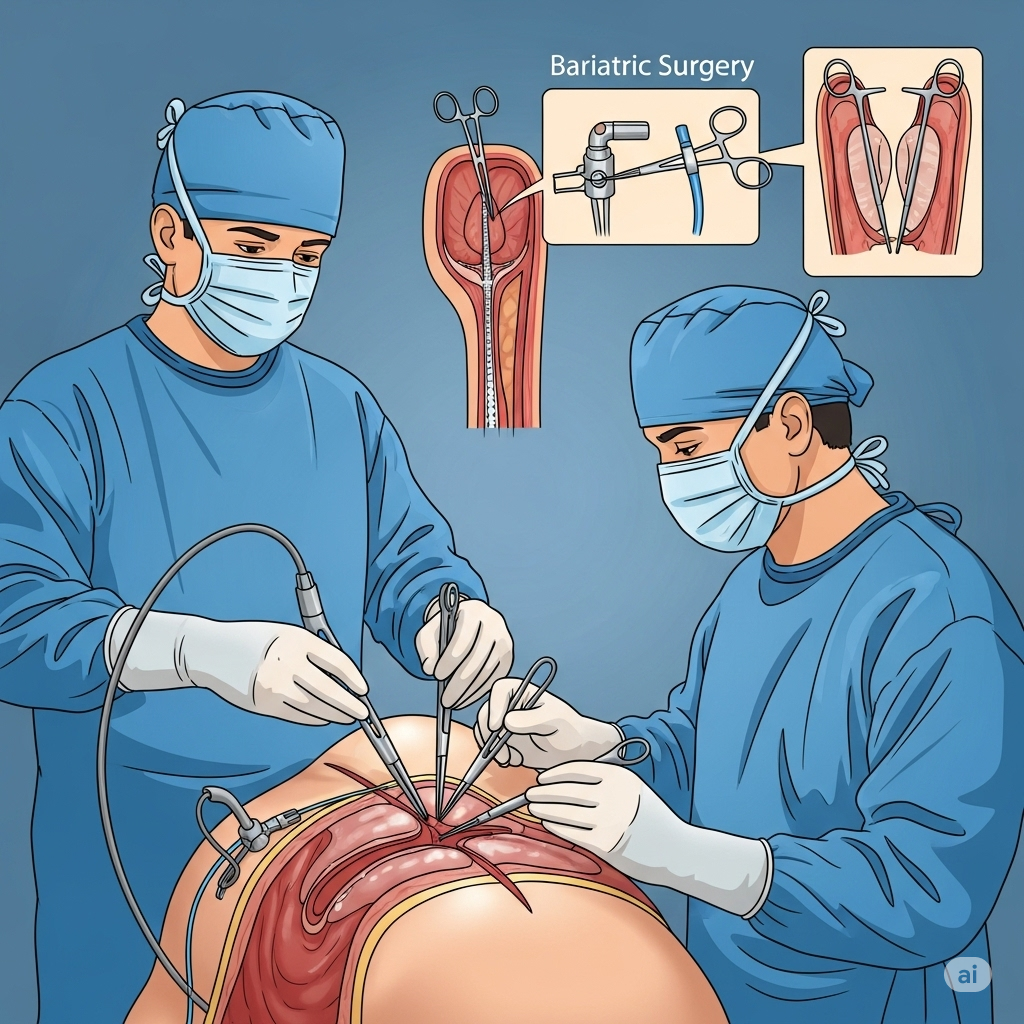
Bariatric Surgery: A Path to Significant Weight Loss and Health Improvement
**Bariatric Surgery**, also known as **Weight Loss Surgery**, refers to a set of surgical procedures performed on the stomach or intestines to help individuals with severe obesity achieve substantial and sustained weight loss. These procedures work by either restricting the amount of food the stomach can hold, reducing nutrient absorption, or a combination of both. While Dr. kshitiz saran as a leading Gastroenterologist, does not perform bariatric surgeries himself, he plays a vital role in the **multidisciplinary care** of bariatric patients, offering expert pre-operative evaluation (including diagnostic endoscopy), managing gastrointestinal issues after surgery, and addressing potential complications with advanced endoscopic techniques in Faridabad.
Understanding Severe Obesity and When Bariatric Surgery is Considered:
Obesity is a complex chronic disease that can lead to numerous severe health conditions (comorbidities) such as Type 2 diabetes, high blood pressure, sleep apnea, heart disease, certain cancers, and joint problems. When diet, exercise, and medication have not been successful in achieving significant and lasting weight loss, bariatric surgery becomes a powerful tool. It is generally considered for individuals who meet specific criteria:
- A **Body Mass Index (BMI) of 40 or higher** (extreme obesity).
- A **BMI of 35 to 39.9** (obesity) with at least one obesity-related health condition (e.g., Type 2 Diabetes, severe sleep apnea, high blood pressure, severe joint pain).
- A demonstrated commitment to long-term lifestyle changes and follow-up care.
Common Types of Bariatric Surgery Procedures:
The most common types of bariatric surgeries include:
- **Sleeve Gastrectomy (Gastric Sleeve):** This procedure involves removing about 80% of the stomach, leaving a smaller, banana-shaped pouch or "sleeve." This significantly reduces the amount of food that can be consumed and also reduces the production of ghrelin, the hunger-stimulating hormone.
- **Roux-en-Y Gastric Bypass:** In this procedure, a small stomach pouch (about the size of an egg) is created, and a section of the small intestine is bypassed and connected directly to this new pouch. This limits food intake and reduces the absorption of calories and nutrients.
- **Biliopancreatic Diversion with Duodenal Switch (BPD/DS):** This is a more complex procedure involving two parts: creating a sleeve gastrectomy and then bypassing a much larger portion of the small intestine. It results in the most significant weight loss but also carries a higher risk of nutritional deficiencies.
- **Adjustable Gastric Banding:** (Less commonly performed now) An inflatable silicone band is placed around the upper part of the stomach, creating a small pouch above it. The band can be adjusted to control the size of the opening into the rest of the stomach.
Benefits of Bariatric Surgery:
- **Significant and Sustained Weight Loss:** Can lead to 50-70% excess weight loss.
- **Resolution or Improvement of Comorbidities:** Often leads to remission of Type 2 diabetes, improvement in blood pressure, cholesterol levels, sleep apnea, and joint pain.
- **Improved Quality of Life:** Enhanced mobility, mood, self-esteem, and overall well-being.
- **Increased Longevity:** Studies suggest bariatric surgery can reduce the risk of premature death in severely obese individuals.